
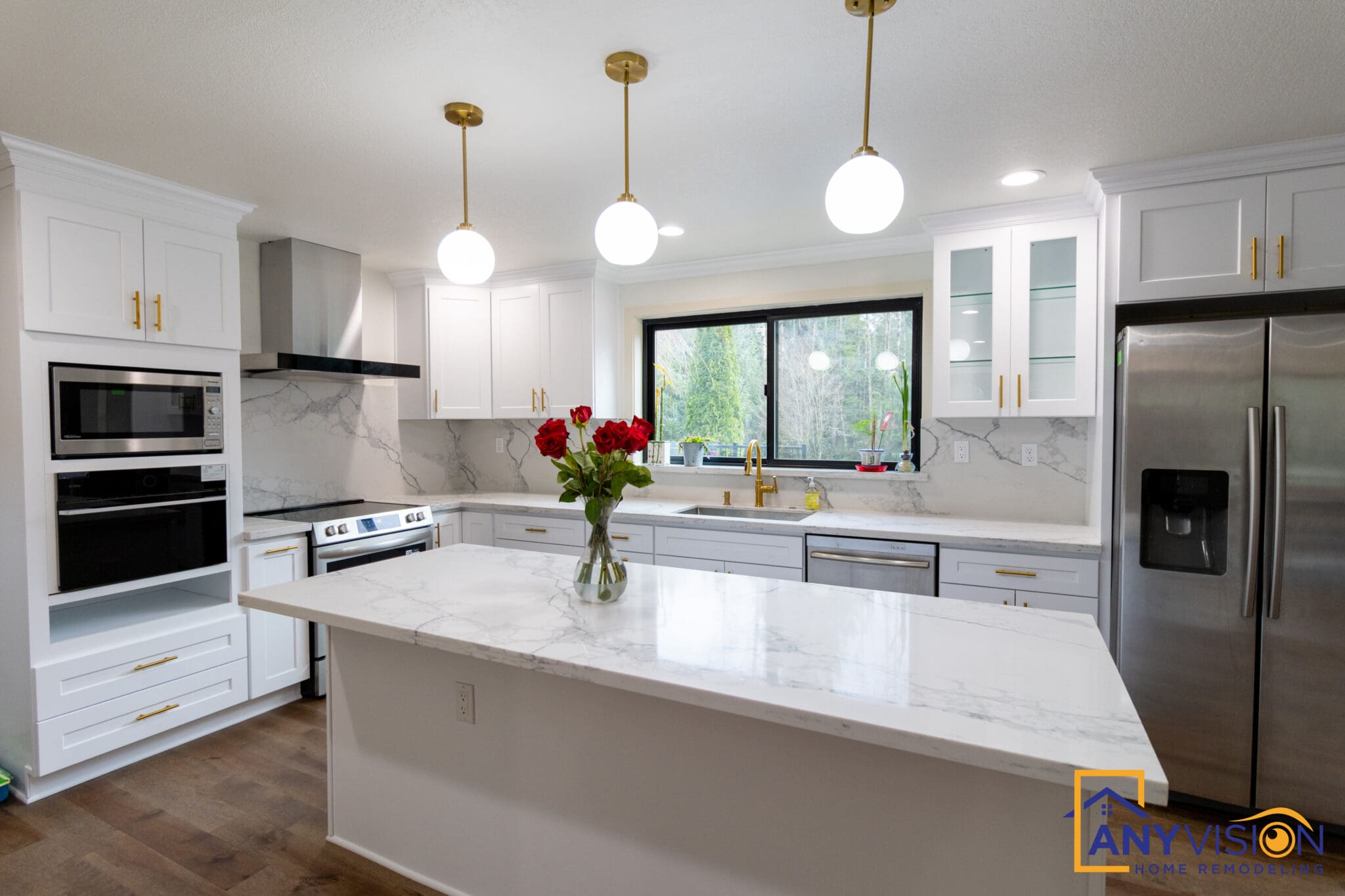
A kitchen can look clean and still fail to reflect the way a household actually lives.
Kitchen remodeling in Redmond should begin with function first, then style.
A well-planned kitchen remodel can improve cooking space, storage, lighting, movement, and daily comfort.
It can also support home value when the work is planned carefully, built safely, and matched to the home’s real needs.
For homeowners comparing layouts, materials, permits, costs, and contractors, this guide explains the remodeling process from early planning to the final walkthrough.
Anyvision Home Remodeling serves Redmond and the greater Seattle area with kitchen remodeling in Redmond, bathroom remodeling, ADU construction, additions, and whole-home remodeling services.
The company highlights one in-house crew, one project manager, free 3D design, daily photo and video updates, free estimates, and Washington license #ANYVIHR768KB.
Why Kitchen Remodeling in Redmond Starts With Planning
A strong remodel does not begin with cabinets, countertops, or flooring.
It begins with one simple question: What is making the kitchen hard to use right now?
For some homeowners, the issue is a cramped layout.
For others, it may be poor lighting, old plumbing, worn flooring, weak storage, or a kitchen island that blocks movement.
Redmond homes also need practical material choices.
Western Washington has long wet seasons, so water-resistant flooring, strong ventilation, and durable finishes matter.
Some Redmond homes may also have older layouts that benefit from smarter space planning, updated fixtures, or improved cabinet storage.
Step 1: Define the Scope of the Kitchen Remodel
Before choosing finishes, define the scope of the project.
A smaller remodel may include cabinet updates, new countertops, lighting changes, flooring, backsplash, and paint.
A larger remodel may include layout changes, custom cabinetry, new appliances, flooring, plumbing, electrical work, framing, and updated fixtures.
Common project scopes include:
Cosmetic refresh
Cabinet and countertop replacement
Flooring and backsplash update
Lighting and electrical upgrade
Plumbing fixture replacement
Full kitchen layout redesign
Wall removal or structural changes
Kitchen and bathroom remodeling together
A clear scope helps control the budget.
It also helps the homeowner understand whether permits, design planning, or a dedicated project manager may be needed.
Step 2: Set a Realistic Budget
Kitchen remodeling costs in Redmond can vary based on kitchen size, materials, labor, design choices, and permit needs.
In Redmond, WA, most smaller kitchen remodeling projects start around $15,000 to $30,000, while larger, fully custom spaces can exceed $60,000.
Anyvision’s Redmond remodeling page lists kitchen remodels at about $35,000 to $120,000+.
A smaller kitchen update may stay closer to the lower end.
A larger remodel with layout changes, custom cabinetry, upgraded countertops, plumbing updates, improved lighting, and premium finishes may reach the higher end.
The final cost depends on:
| Cost Factor | Why It Matters |
|---|---|
| Kitchen size | Larger spaces need more labor and materials |
| Layout changes | Moving plumbing, electrical, mechanical systems, or walls can increase the cost |
| Cabinetry | Custom cabinets cost more than standard options |
| Countertops | Quartz, granite, and other durable surfaces vary by material, edge, and installation |
| Flooring | Water-resistant materials may cost more upfront, but can last longer |
| Lighting | Recessed lights, pendants, and under-cabinet lighting add labor |
| Fixtures | Sink, faucet, disposal, and hardware choices affect price |
| Permits | Structural, plumbing, electrical, and mechanical work may require approval |
| Hidden issues | Water damage, old wiring, or uneven floors can change the budget |
A contingency budget of 15% to 20% is smart.
Older homes may hide water damage, uneven floors, old wiring, or past repairs behind walls and cabinets.
Step 3: Build Around a Functional Layout
A beautiful kitchen is frustrating if the layout does not work.
The best layouts make cooking, cleaning, storage, and movement feel simple.
A classic planning idea is the kitchen work triangle.
Keep the path between the sink, stove, and refrigerator as uninterrupted as possible so food preparation feels smoother.
The triangle does not need to be perfect, but the main work zones should not feel blocked.
Today’s homeowners often want layouts that balance functionality with an inviting feel, using efficient movement and smart storage solutions.
A functional layout should include:
Clear walking paths, enough counter space near the stove and sink. Smart storage near prep areas, Easy access to the refrigerator, Good lighting over work surfaces, Safe spacing around doors and appliances, Room for more than one person when possible
If an island is included, clearance matters.
Many kitchens need about 36 to 42 inches of walkway space around an island so cabinets, appliances, and people can move without conflict.
Step 4: Choose Storage Before Style
Storage should come before finishes.
A kitchen can have a modern look and still feel messy if storage is weak, because modern design relies on streamlined cabinetry, energy-efficient appliances, and durable, low-maintenance materials that work well for busy households.
Smart storage can make a major difference in daily life.
Useful storage choices include:
Deep drawers for pots and pans, Pull-out shelves for lower cabinets, Pantry cabinets for dry goods, Vertical dividers for trays and cutting boards, Hidden trash and recycling pull-outs, Spice drawers near the cooking area, Corner cabinet systems, Drawer inserts for utensils, Tall cabinets for small appliances
The right cabinetry depends on the homeowner’s lifestyle and should address each household’s unique needs.
A household that cooks often may need more prep storage.
A household that hosts friends may need more serving space, drink storage, or seating.
Anyvision’s kitchen remodeling service page highlights smart layouts, custom cabinetry, and high-quality finishes as part of creating a kitchen that is both functional and attractive.
Step 5: Select Materials That Fit Redmond Homes
Material selection should be handled with attention to detail so it matches both style and function.
Many modern kitchens use clean lines and minimalist features for a sleek, uncluttered look.
In Redmond, water resistance matters because the local climate is wet for much of the year.
Flooring should handle spills, damp shoes, and daily use, so water-resistant materials such as Luxury Vinyl Plank (LVP) or engineered hardwood are smart choices for Redmond’s rainy conditions.
Good flooring options may include:
Luxury vinyl plank, Engineered hardwood, Porcelain tile, Water-resistant laminate, Sealed natural stone
Countertops should also match how the kitchen is used.
Quartz, granite, and other durable countertop materials can work well for busy kitchens.
Cabinets should be strong enough for daily use.
The finish should also pair well with lighting, flooring, backsplash, and wall color.
Light-toned elements and reflective surfaces can help brighten a kitchen during long Western Washington winters.
Step 6: Plan Lighting in Layers
Lighting changes how a kitchen feels.
One ceiling light is rarely enough.
A useful kitchen lighting plan includes three layers:
General lighting for the full room
Task lighting for counters, sink areas, and cooking zones
Accent lighting for depth and style
Under-cabinet lights help with food prep.
Pendant lights can define an island or seating area.
Recessed lights can create even brightness across the room.
Natural light also matters.
Light cabinet colors, reflective tile, and clean window lines can make a kitchen feel brighter without adding square footage.
Step 7: Understand Permits Before Construction
Permits protect the home, the homeowner, and the project.
In Redmond, electrical, mechanical, plumbing, structural, and major remodeling work may require permits depending on the scope.
A permit may be needed for:
Moving walls
Changing structural framing
Updating plumbing
Installing new electrical circuits
Changing mechanical systems
Major layout changes
Cosmetic work may not always require a permit.
Still, homeowners should confirm requirements before construction starts.
Skipping required permits can cause problems during final inspection, insurance review, appraisal, or resale.
For projects involving demolition or qualifying building permits, homeowners should also confirm whether Redmond’s construction and demolition waste reporting requirements apply.
Step 8: Choose the Right Contractor
Choosing the right contractor for a kitchen remodel project can make a huge difference in the outcome.
A good contractor communicates clearly, explains the scope, protects the home, and works as a professional with expertise in Redmond requirements and local code.
Homeowners in Washington can use the Department of Labor & Industries contractor verification tool to check active contractor registration, bond status, insurance details, safety citations, and other records.
Before signing a contract, check:
Contractor registration, Bond, and insurance status, Written scope of work, Payment schedule, Timeline.
Permit responsibility. Change order process, Warranty or workmanship terms in the contract, Cleanup plan, Communication process
Licensed and insured contractors help protect the homeowner’s investment and support compliance before work begins.
Anyvision Home Remodeling states that it is licensed, bonded, and insured, with WA Lic #ANYVIHR768KB.
Its Redmond page also highlights one in-house crew, one project manager, free 3D design, daily photo and video updates, and a free estimate process.
That type of structure can help homeowners avoid confusion, delays, and communication gaps throughout the remodeling process, keeping the work aligned with the homeowner’s vision and expectations.
Step 9: Use a Clear Remodeling Process
A kitchen remodel works best when each stage has a clear order.
Jumping ahead can cause delays, rework, and extra costs.
A common remodeling process looks like this:
Initial Planning
Homeowners define goals, budget, needs, and style.
Measurements and Design
The layout, cabinets, appliances, lighting, and materials are planned.
Material Selection
Countertops, flooring, fixtures, cabinetry, hardware, and backsplash are chosen.
Permits and Approvals
Required permits are submitted before major work begins.
Demolition
Old cabinets, counters, flooring, or walls are removed.
Rough Construction
Plumbing, electrical, framing, and mechanical work are completed.
Inspection
Work that needs approval is checked before walls or finishes are closed.
Installation
Cabinets, countertops, flooring, backsplash, fixtures, and lighting are installed.
Final Walkthrough
The homeowner checks details before the job is complete.
This order helps keep the project moving from idea to finished kitchen.
It also reduces confusion between the homeowner, contractor, and any trade professionals involved.
Step 10: Prepare for Daily Disruption
A kitchen remodel affects daily life.
Even a well-managed project can create dust, noise, and limited access to cooking space.
Before construction begins, set up a temporary food area.
Include:
Microwave Coffee maker, mini fridge, paper plates, basic utensils, trash bags, bottled water or filtered water, small prep table
Protect nearby rooms with floor coverings and dust barriers.
Keep pets and children away from work areas.
Ask how often cleanup will happen and where materials will be stored.
These small steps help minimize disruption during the remodel.
Step 11: Watch for Hidden Issues
Hidden issues are common during renovations.
They often appear after cabinets, drywall, or flooring are removed.
Possible problems include:
Water damage near sinks or dishwashers
Old plumbing
Outdated wiring
Uneven subfloors
Mold behind cabinets
Poor past repairs
Weak ventilation
Damaged wall framing
These issues can affect the budget and timeline.
They should not be ignored.
Fixing hidden damage during construction helps protect the new kitchen and the rest of the house.
Step 12: Focus on the Final Walkthrough
The final walkthrough is the last chance to review the work closely.
It should be calm, detailed, and practical, with the work checked to the highest standards.
Check the items you will use every day, paying close attention to small details during the walkthrough.
Final walkthrough checklist:
Cabinet doors line up correctly
Drawers open and close smoothly
Countertops are secure
The sink and faucet do not leak
Disposal works
Outlets and switches work
The lights turn on correctly
Flooring transitions are safe
Backsplash grout looks clean
Interior doors open without rubbing
Appliances sit level
Caulk lines are smooth
Paint touch-ups are complete
The job site is clean
If permits were part of the project, final inspection may be required before the remodel is fully complete.
Common Kitchen Remodel Mistakes to Avoid
The most common mistakes are usually planning mistakes.
They happen before construction starts.
Avoid these problems:
Choosing looks over function
Forgetting enough outlets
Making walkways too narrow
Ignoring ventilation
Ordering materials late
Underestimating the budget
Changing the layout mid-project
Choosing flooring that cannot handle moisture
Skipping permit checks
Hiring without checking registration and insurance
Forgetting storage for trash, recycling, and small appliances
A remodel should give the kitchen new life.
But that only happens when the space works better after the work is done.
What Makes a Redmond Kitchen Remodel Successful?
A successful remodel uses tailored solutions to balance beauty, function, budget, and code.
It creates a new kitchen that fits the house, reflects the family’s unique style, and supports the way food is prepared each day.
The best results often come from practical decisions:
Better lighting, better cabinet access, durable countertops, water-resistant flooring, and clear prep zones. Strong ventilation, smart storage, practical fixtures, and a layout that supports daily cooking
A dream kitchen does not need to be the most expensive kitchen.
It needs to solve the right problems.
Why Redmond Homeowners Choose Anyvision Home Remodeling
Anyvision Home Remodeling is a local company serving Redmond homeowners and the greater Seattle area with kitchen and bathroom remodeling, ADUs, additions, and full-home remodeling projects.
For Redmond remodeling projects, the company highlights:
One in-house crew
One project manager
Free 3D design
Daily photo and video updates
Clear project scope
Free consultation
Washington license #ANYVIHR768KB
100+ reviews
200+ projects completed since 2018
This matters because kitchen remodeling involves many moving parts, and an experienced team helps keep each phase coordinated.
When design, communication, materials, scheduling, and construction are organized from the start, homeowners have a clearer path from the first consultation to the final walkthrough, with a company that understands the Redmond community.
Final Thoughts
A kitchen remodel can improve function, comfort, and property value when it is planned with care.
Start with the pain points, set a realistic Redmond budget, check permit needs, choose durable materials, and keep communication clear from the first meeting to the final walkthrough.
The goal is simple: create a kitchen that looks good, works well, and supports everyday life in a Redmond home.
For homeowners ready to plan a kitchen remodel in Redmond, Anyvision Home Remodeling offers free estimates, 3D design support, and a licensed remodeling team serving Redmond and the surrounding area.